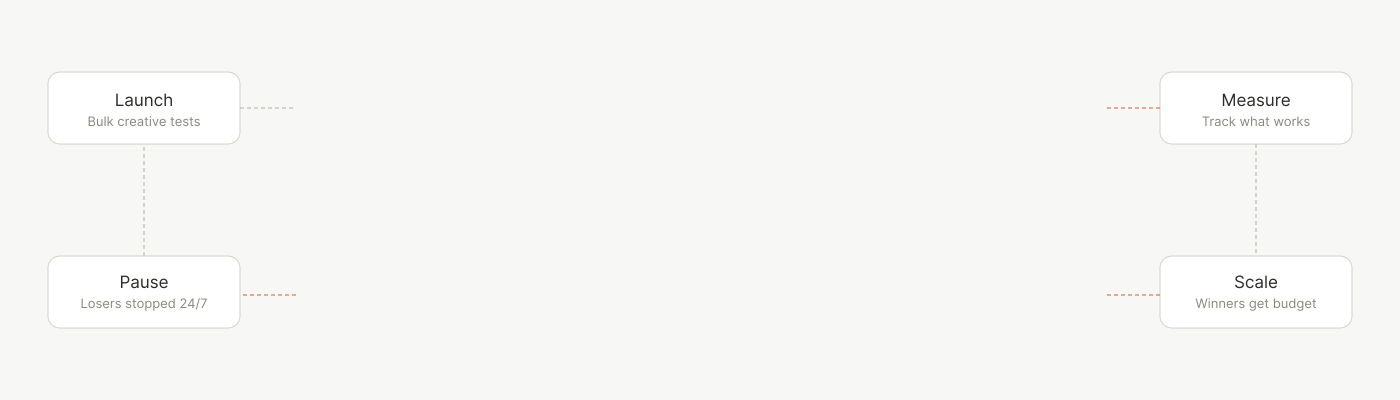
Ad testing is how performance teams find winners. But "testing" means different things depending on the bottleneck — some teams need more creative variations (more static ads to test), some need faster launches, some need automated decisions on live ads. This guide covers the best tools by what part of the testing workflow they actually solve.
In this article:
- Why Ad Testing Matters (and Why Most Teams Do It Too Slowly)
- What to Look for in an Ad Testing Tool
- The Best Ad Testing Tools in 2026
- Ad Testing Tools Comparison Table
- How to Choose the Right Tool for Your Team
- How to Build a Creative Testing Framework
Why Ad Testing Matters (and Why Most Teams Do It Too Slowly)
The math behind ad creative testing is simple: more tests mean faster learning, which means better ROAS. A team that tests 50 creatives per week will find winners faster than one testing 10. Over a quarter, the compounding effect on performance is significant.
But most teams are not bottlenecked by strategy. They know what to test. The problem is operational. Building ad sets one by one in Ads Manager takes hours. Downloading creatives from a shared folder and re-uploading them wastes time every cycle. Checking dashboards manually to catch a failing ad at 2 AM is not realistic. And without a systematic way to kill losers and reallocate budget, wasted spend accumulates silently.
Testing velocity is an operations problem, not a strategy problem. The right tools remove the friction between having a creative and knowing whether it works. For a deeper look at the automation side, see the 13 best Facebook ads automation tools.
What to Look for in an Ad Testing Tool
Not every ad testing platform solves the same problem. Before comparing tools, it helps to know which capabilities matter most for your workflow.
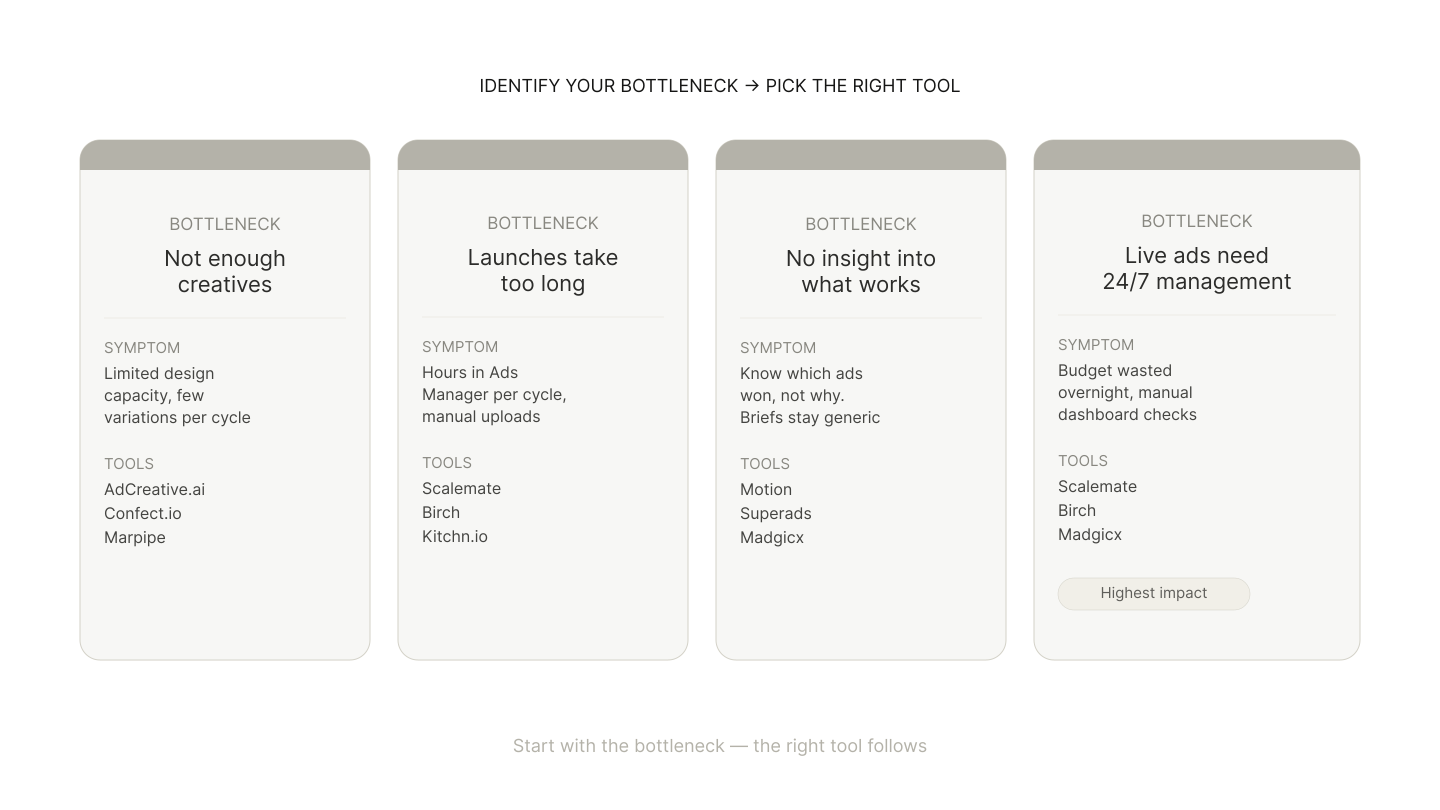
Start with the bottleneck — the right tool follows.
Launch speed. How fast can you get creatives into a live test? Manual setup in Ads Manager means minutes per ad set. Bulk launch tools collapse that to minutes per campaign. For high-volume teams, this is the single biggest time saver.
Automation rules. Can the tool auto-pause ads that exceed CPA thresholds? Can it scale budget on winners? Does it support rollback if a scaling decision backfires? Automation rules turn ad testing from a manual daily task into a system that runs 24/7.
Creative analytics. Some tools focus on helping you understand why a creative works — which hooks, formats, and visual elements drive performance. This is different from basic reporting. Deep creative analytics inform the next round of tests, not just the current one.
Platform support. Meta-only tools cover the largest paid social channel, but teams running facebook ad testing alongside tiktok ad testing need cross-platform support. Check whether the tool manages campaigns or just reports on them across platforms.
Volume handling. Can the tool handle 50 or more creatives at once? A/b testing ad creatives with two or three variations is straightforward. Testing at scale — dozens of creatives across multiple audiences and placements — requires tooling built for volume.
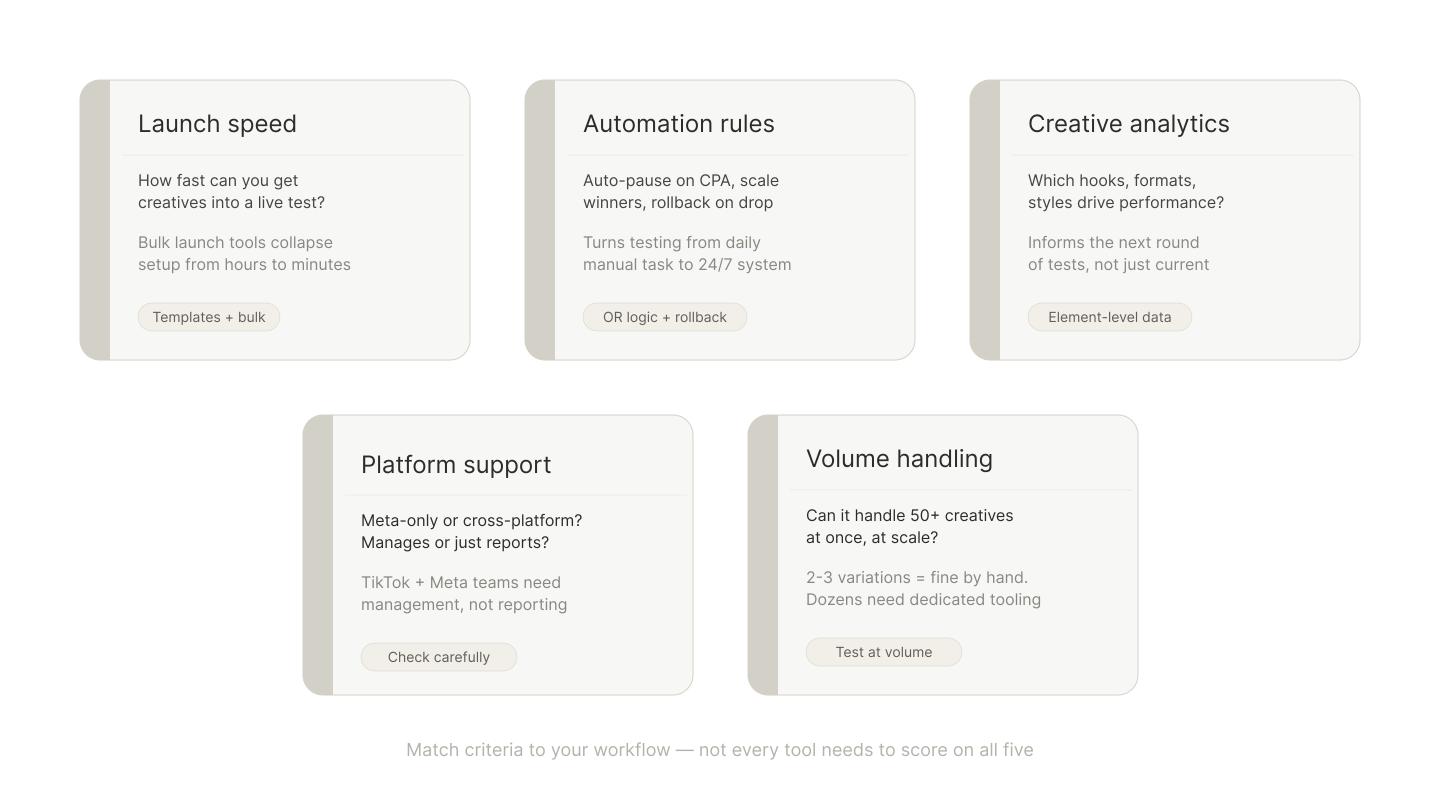
Match criteria to your workflow — not every tool needs to score on all five.
The Best Ad Testing Tools in 2026
1. Meta Native A/B Testing
Meta's built-in A/B testing is free and available to every advertiser. It supports testing one variable at a time — creative, audience, placement, or optimization strategy — with statistical significance tracking. For small teams running simple tests, it covers the basics without adding cost.
The limitations show up at scale. There is no bulk launching, no automation beyond basic native rules (browse 20 production-tested automation rules by goal for what's possible beyond Meta-native), and no way to test multiple variables simultaneously. Manual setup means every test requires hands-on work in Ads Manager.
Best for: Small teams, beginners, simple one-variable tests. Pricing: Free.
2. Scalemate
Scalemate is built around testing velocity. Bulk ad launch from templates lets teams push dozens of creative-audience-placement combinations into live tests in minutes rather than hours. Google Drive sync through the free ad uploader keeps creatives flowing from the design team to ad accounts automatically — no downloads, no duplicates.
Automation rules with rollback run 24/7, pausing ads that exceed CPA thresholds and scaling winners. The rollback feature is distinct — if a scaling rule pushes budget too high and performance drops, the system reverts automatically. Scalemate supports Meta and TikTok, and teams report 32% budget savings and 62% time reduction on ad management.
Scalemate does not include creative analytics or AI creative generation. It solves the launch-and-manage side of ad creative testing, not the analysis or production side.
Best for: Teams where getting creatives into test and managing live ads is the bottleneck. Pricing: Free uploader tier available; paid plans scale with ad spend.
3. AdCreative.ai
AdCreative.ai uses AI to generate ad creative variations with performance scoring. It produces images, headlines, and copy variations that teams can feed into testing workflows. The scoring system predicts which variations are more likely to perform, helping prioritize what to test first.
It is a creative generation tool, not an ad testing platform. There is no bulk launch, no automation rules, and no campaign management. For a detailed comparison, see AdCreative.ai alternatives.
Best for: Teams that need more creative variations to test but lack design capacity. Pricing: From $29/month.
4. Motion
Motion provides deep creative-level analytics that go beyond standard ad reporting. Visual dashboards break down performance by creative element — hooks, formats, aspect ratios, visual styles — showing not just which ads win but why they win. This feeds directly into smarter creative briefs for the next round of tests.
Motion does not launch or manage ads. It is purely an analytics layer that connects to Meta and TikTok.
Best for: Teams that need to understand which creative elements drive results. Pricing: From $99/month.
5. Superads
Superads is a creative reporting dashboard that connects to Meta, TikTok, and Google. It gives agencies and in-house teams a centralized view of creative performance across accounts and platforms, with visual reporting built for sharing with stakeholders.
Like Motion, Superads is analytics-only. It does not launch ads or automate campaign management.
Best for: Agencies managing creative reporting across multiple clients. Pricing: From $49/month.
6. Smartly.io
Smartly.io is an enterprise creative automation platform that handles dynamic creative templates, automated production, and cross-platform publishing. It is strong on the creative production side — generating variations at scale from templates and data feeds.
For testing specifically, the launch interface mirrors Ads Manager and is not built for fast bulk testing. Teams looking for rapid creative testing velocity may find the workflow slower than expected despite the platform's depth. Smartly works best for large organizations that need creative production automation more than testing speed.
Best for: Enterprise teams with $100K+/month spend focused on creative production. Pricing: Custom (enterprise).
7. Birch (formerly Revealbot)
Birch focuses on cross-platform automation rules with support for Meta, Google, TikTok, and Snapchat. Rules go beyond native capabilities with compound conditions, OR logic, time-based scheduling, and Slack notifications. Birch also includes a Launcher for bulk ad creation and creative upload capabilities.
The combination of rules and bulk launch makes Birch one of the more complete creative testing tools for teams running ads across multiple platforms.
Best for: Cross-platform rule-based automation with bulk launch. Pricing: From $99/month; scales with ad spend.
8. Madgicx
Madgicx combines AI-powered audience discovery, creative scoring, and automation rules. The AI audiences feature suggests targeting segments based on historical data, while creative scoring helps identify likely winners before committing full budget.
Madgicx is Meta-focused. Other platforms are supported for reporting only, not campaign management. There is no cloud storage sync for creative uploads.
Best for: E-commerce teams focused on Meta with interest in AI audience optimization. Pricing: From $69/month.
9. Marpipe
Marpipe specializes in multivariate ad testing. Upload creative components — headlines, images, CTAs, backgrounds — and Marpipe auto-generates every possible combination, then reports on which individual elements drive performance. This structured approach to ad creative testing reveals insights that standard A/B tests miss.
The trade-off is that Marpipe focuses on Meta and the testing structure is rigid. It works best for teams that want disciplined, element-level testing rather than rapid iteration.
Best for: Teams running structured multivariate creative tests. Pricing: Custom.
10. Confect.io
Confect.io generates dynamic product creatives from catalog data. For e-commerce brands with large product feeds, it automates the production of product-specific ad creatives at scale — prices, reviews, labels, and visual styling pulled directly from the catalog.
Confect solves the creative production bottleneck for catalog ads specifically. It does not handle non-catalog creatives or provide ad testing software features like rules or bulk launch.
Best for: E-commerce with large product catalogs needing automated creative production. Pricing: From $99/month.
Ad Testing Tools Comparison Table
| Tool | Best For | Bulk Launch | Rules / Auto-Pause | Creative Upload | Pricing |
|---|---|---|---|---|---|
| Meta Native | Simple A/B tests | No | Basic (AND only) | Manual | Free |
| Scalemate | Testing velocity | Yes (templates) | Yes (with rollback) | Google Drive sync | Free tier |
| AdCreative.ai | Creative generation | No | No | N/A | From $29/mo |
| Motion | Creative analytics | No | No | N/A | From $99/mo |
| Superads | Creative reporting | No | No | N/A | From $49/mo |
| Smartly.io | Enterprise production | Yes | Basic | Yes | Enterprise |
| Birch | Cross-platform rules | Yes (Launcher) | Yes (OR logic) | Yes | From $99/mo |
| Madgicx | AI audiences (Meta) | Limited | Yes | Manual | From $69/mo |
| Marpipe | Multivariate testing | Yes (generated) | No | Upload components | Custom |
| Confect.io | Catalog creatives | Yes (catalog-driven) | No | Product feed | From $99/mo |
How to Choose the Right Tool for Your Team
The best ad testing tool depends on where the workflow breaks down. Start with the bottleneck, not the feature list.
"We don't have enough creatives to test." The constraint is production, not distribution. AdCreative.ai generates variations using AI. Confect.io automates product creatives from catalog data. Both feed the testing pipeline without requiring more design hours.
"We have creatives but launching tests takes too long." The constraint is operational speed. Scalemate's template-based bulk launch and Birch's Launcher both collapse setup time from hours to minutes. Look for tools that support reusable templates and multi-combination launches.
"We need to understand what is actually working." The constraint is insight. Motion and Superads provide creative-level analytics that standard ad platform reporting does not. Understanding which hooks, formats, and elements drive results makes every future test smarter.
"We need to auto-manage live ads around the clock." The constraint is optimization speed. Scalemate, Birch, and Madgicx all offer automation rules that pause underperformers and scale winners without manual checks. For teams worried about aggressive scaling, automation rules with rollback add a safety net.
"We want one platform for everything." Smartly.io covers the most ground at enterprise scale and budget. For teams below that threshold, combining two or three specialized tools often works better than one platform that does everything adequately but nothing exceptionally. A creative testing platform for analytics paired with ad testing software for launch and rules covers most workflows.
How to Build a Creative Testing Framework
Tools handle the execution, but they do not replace a testing process. A creative testing framework defines what to test, how to structure campaigns, when to pause or scale, and how to feed learnings back into creative production. Without a framework, even the best tools produce noise instead of signal.
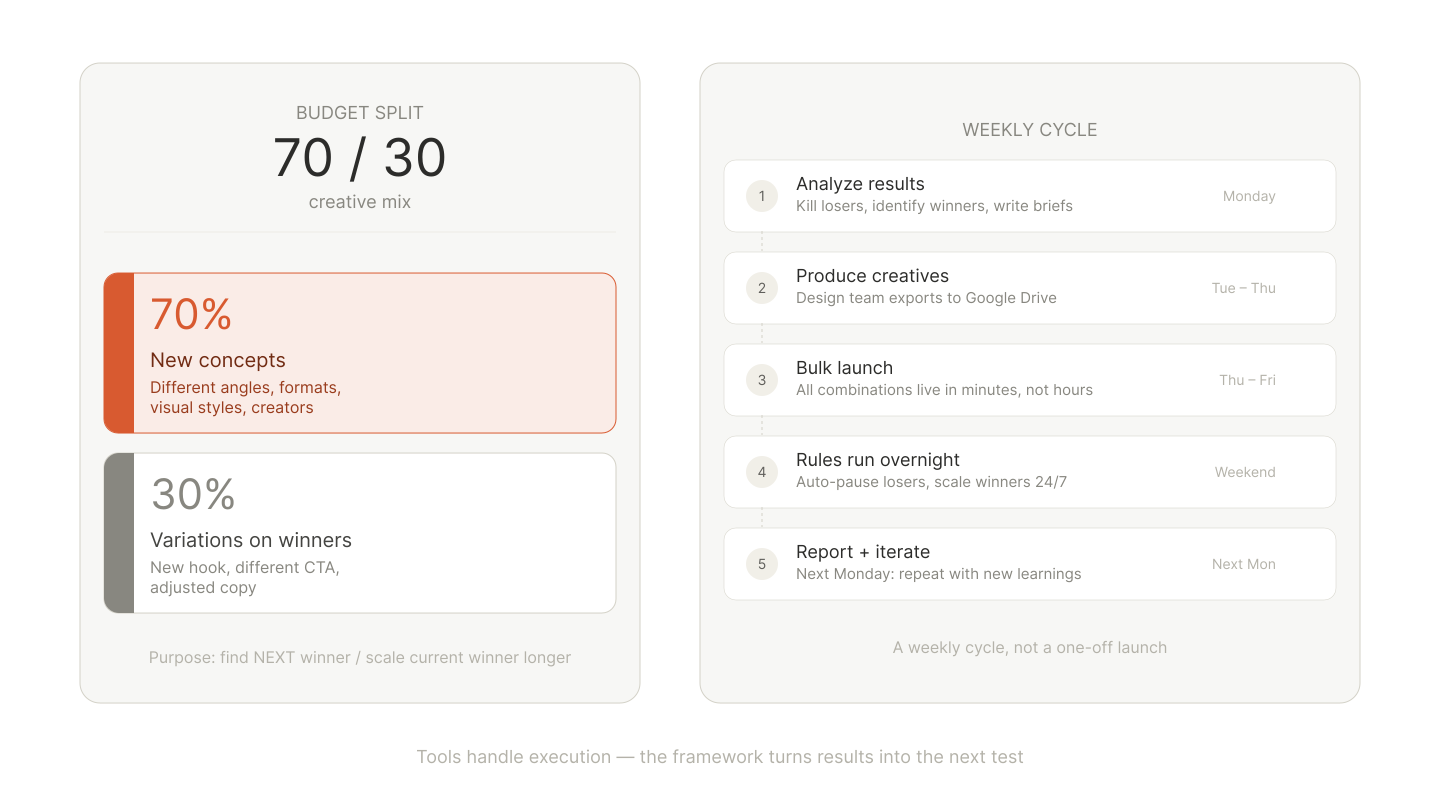
Tools handle execution — the framework turns results into the next test.
The basics: define kill and scale thresholds before launch, not after. Allocate roughly 70% of testing budget to new concepts and 30% to iterations on proven winners. Run weekly cycles — analyze results, brief the next round, launch, optimize, report. Teams that follow a structured cycle consistently outperform those that test reactively.
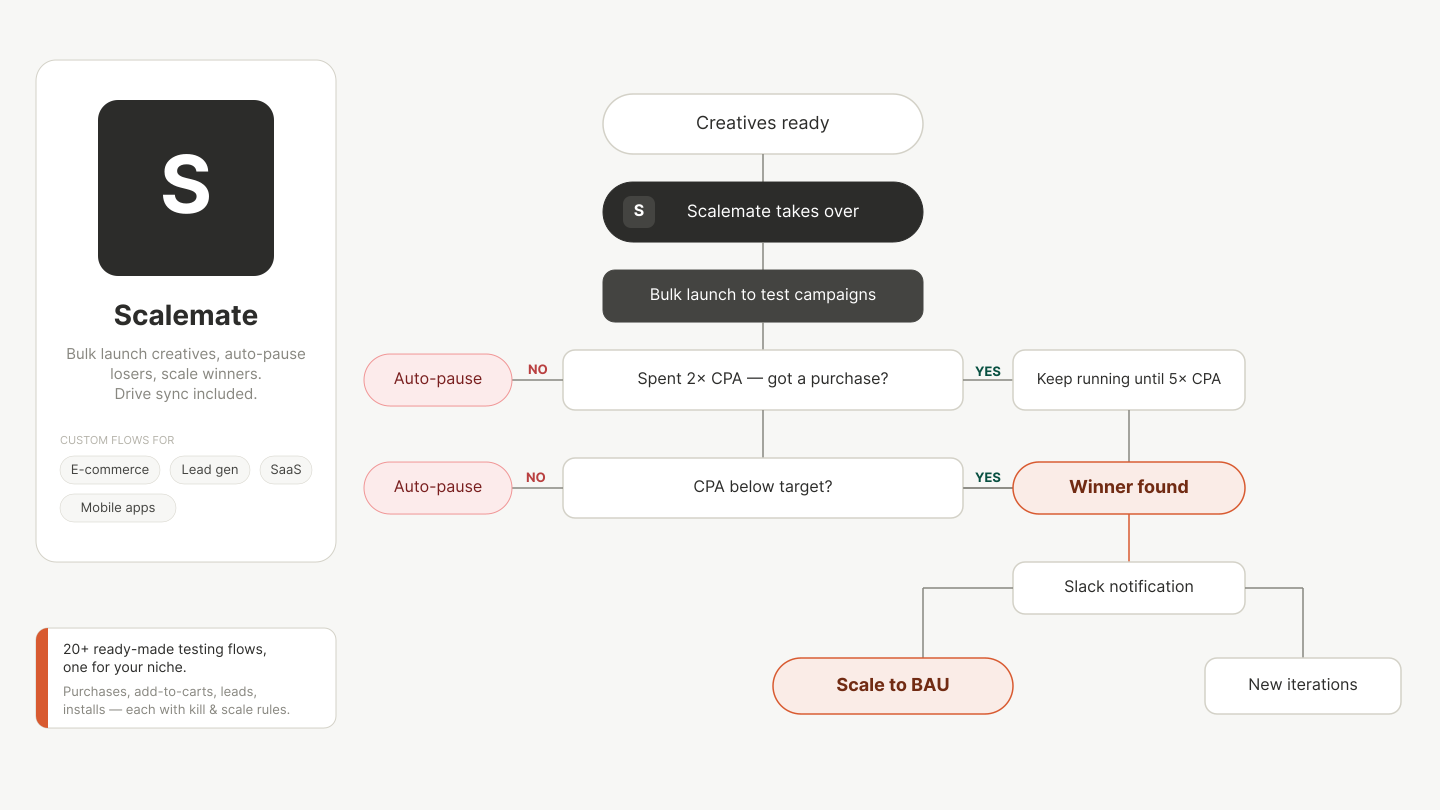 Scalemate's automated testing flow — from creative handoff to winner scaling.
For a complete walkthrough with checklists and campaign structures, read the full framework guide. Related reading: what is ad fatigue and AdCreative.ai alternatives for creative production options.