
TL;DR
- A Meta ads learning phase reset is when Meta discards the delivery signal an ad set has built and starts learning again after a significant edit.
- Meta's wording is "around 50 optimization events since its last significant edit" (Meta Business Help Center), not "50 per week". The seven-day framing is a corollary, not the rule.
- On budget, Meta says only that changes "may also be significant, but it depends on the magnitude of the change" (Meta Business Help Center). The 20% threshold everywhere else is a third-party rule of thumb from WordStream and Niblin, neither citing Meta (checked July 27, 2026).
- A page ranking on the first results page here claims Meta now needs only 10 events in 3 days. It carries no Meta announcement, changelog, screenshot or doc link (checked July 27, 2026).
- The workable answer is not "don't touch anything". It is batching edits into one window and stepping budgets on a schedule, so you pay for one relearning period instead of six.
What a learning phase reset actually is
You add three creatives to the ad set that was finally working, and by Wednesday delivery has fallen over. A media buyer in r/FacebookAds described that exact sequence in April 2026: new ads launched into an existing ad set mid-scale, at 7-10 conversions a day, and the learning phase restarted (thread, April 24, 2026). A Meta ads learning phase reset is when the delivery system discards an ad set's accumulated optimization signal and starts relearning after a significant edit.
The phase itself is not a penalty. Meta calls it "the period when the delivery system still needs to learn about how an ad set may deliver and perform" (Meta Business Help Center). Cost per result usually runs higher there than it does once the phase ends. The reset is what hurts: it takes an ad set that already paid for its learning and sends it back to the start.
Learning phase vs Learning limited
These get conflated constantly and they have different causes. Learning phase is a state a healthy ad set exits. Learning limited is a volume problem: Meta states that "if your bid or cost control is too low to receive enough optimization events, the ad set is unlikely to exit the learning phase" (Meta Business Help Center).
That changes what you do next. An ad set in learning needs to be left alone long enough to finish. An ad set stuck in learning limited will not finish however patient you are, because it cannot generate the events. Restructuring or loosening the cost control is the fix there.
What Meta's own docs say (and what they don't)
The 50-events rule, read exactly
Meta's wording is that ad sets usually exit the learning phase after around 50 optimization events since its last significant edit (Meta Business Help Center). A second Meta page puts it slightly differently: the system needs around 50 optimized conversion events per ad set before it can exit (Meta Business Help Center).
Read that phrase again, because almost every article on the Meta ads learning phase flattens it. "Since its last significant edit" is a counter your own edits reset. "50 per week" is what the rest of the web wrote down, and it works as an approximation because Meta's pacing runs on a rolling seven-day basis.
Under the weekly reading a busy ad set looks safe, because it clears 50 events comfortably. Under Meta's wording, a Thursday edit means the count you cleared on Tuesday no longer exists.
Meta's only published duration expectation: performance typically improves after the learning phase, usually a minimum of one week, so avoid judging results too early (Meta Business Help Center).
Which edits Meta calls "significant"
Meta does publish a list, on its significant edits and learning phase page: any change to targeting, any change to ad creative, any change to optimization event, and adding a new ad to your ad set.
A second page, the one defining the Last Significant Edit column in Ads Manager, fills in the softer half: "A significant edit is when you pause your ad set or make a change to optimization event, audience or creative. Changes to bid strategy or budget may also be significant, but it depends on the magnitude of the change" (Meta Business Help Center, checked July 28, 2026).
Two things there are worth sitting with. Adding a new ad is on the list outright, not in the maybe column, which settles an argument the forums have been having for years. Budget sits in the maybe column, with magnitude as the deciding factor and no number attached to it. Most coverage of this topic paraphrases these pages without linking them, which is how "depends on the magnitude" hardened into a 20% rule nobody can trace.
The reset triggers, with sources attached
Every page ranking for this topic states the reset triggers with total confidence and no citations. Five were checked on July 27, 2026: WordStream, Birch, Ignite Visibility, Niblin and Cyberlicious. Not one attaches a Meta source to the reset list, the 50-event figure or the budget threshold.
Below is the trigger list with the sourcing attached, including the rows where the honest answer is "widely believed, not documented".
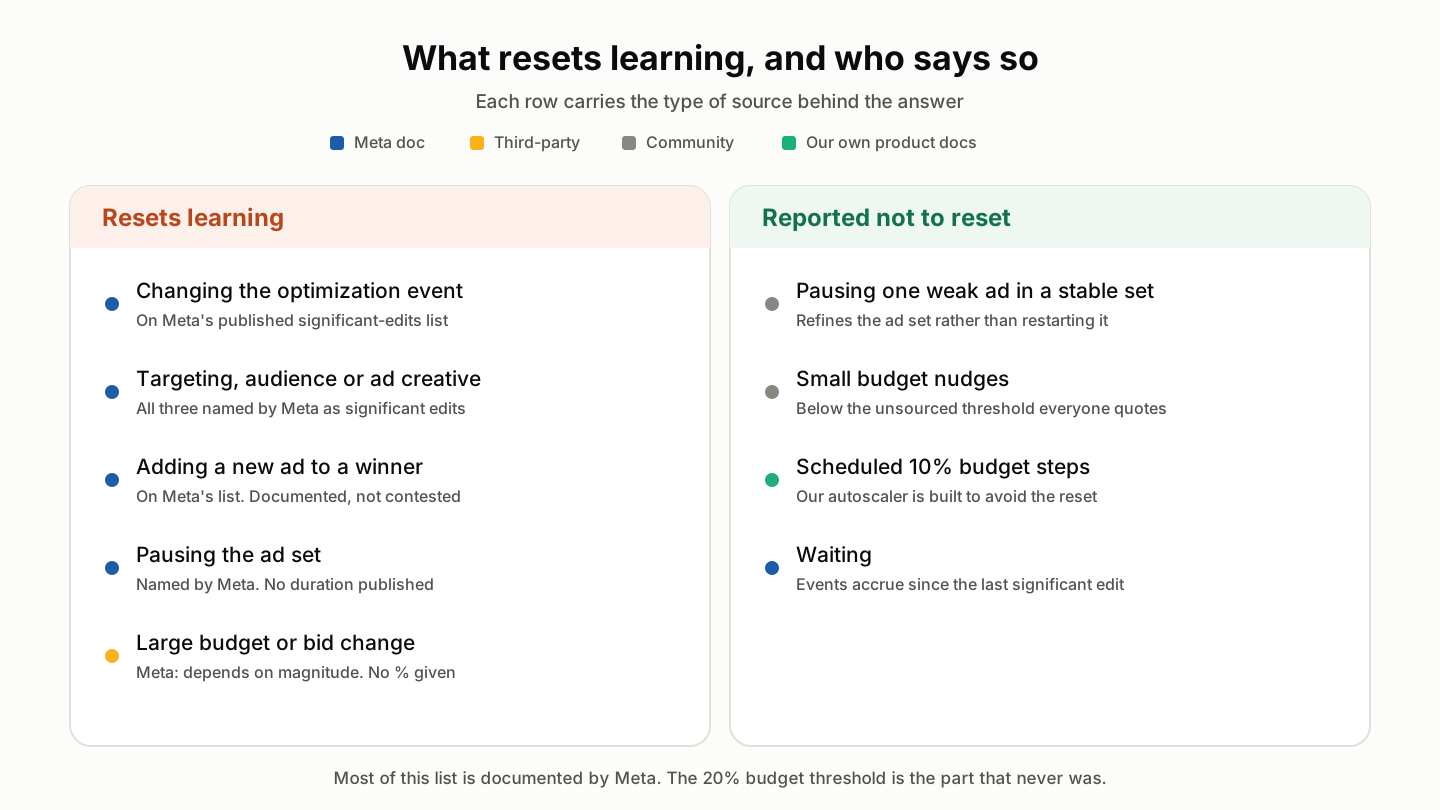
Most of the reset list is documented. The threshold everyone quotes is not.
| Change you make | Resets learning? | What's behind that answer |
|---|---|---|
| Changing the optimization event | Yes | On Meta's own list, and named again in its definition of a significant edit (Meta Help Center). |
| Changing targeting or audience | Yes | On Meta's list as "any change to targeting"; its significant-edit definition says audience too (Meta Help Center). |
| Changing ad creative | Yes | On Meta's list as "any change to ad creative". |
| Adding a new ad to a live ad set | Yes | Meta lists "adding a new ad to your ad set" outright. Buyers disagree on how hard it bites, not on whether it counts. |
| Large budget or bid-strategy change | Maybe, by magnitude | Meta: "may also be significant, but it depends on the magnitude of the change." No threshold published. The 20% figure comes from third-party blogs (WordStream, Niblin), neither citing Meta. |
| Pausing the ad set | Yes | Meta names pausing your ad set in its significant-edit definition. It publishes no duration; the 7-day figure traces to one undated August 2024 blog claim. |
| Pausing individual ads inside a stable ad set | Reported no | Not on Meta's list, which names the ad set rather than its ads. A media buyer describes turning off underperformers as refining the ad set, not restarting it (thread, October 30, 2025). |
| Changing placements | Reported yes | On every ranking page, none of them citing Meta, and not on Meta's published list. Treat as likely, not confirmed. |
| Duplicating an ad set | Yes, for the duplicate | Our own automation rules library: "the duplicate starts in Meta's learning phase, so it underperforms for 48-72h". |
Budget changes and the 20% rule of thumb
The 20% number is the most repeated figure on this topic and the least sourced. WordStream frames it as changes "larger than 20% in a single day", Niblin as "budget increases exceeding 20%". Neither cites Meta, and Meta publishes no percentage anywhere we could find.
What Meta does publish is the shape of the rule without the number: budget changes may be significant, depending on magnitude. So the industry got the mechanism right and invented the threshold. Treat 20% as a heuristic, not a line in the platform. A media buyer reported in April 2026 that a Meta support agent told them campaign budget changes send the campaign back to learning (thread, April 21, 2026). Support agents are not documentation, but the direction matches.
Adding creatives to a live, winning ad set
This is the most common trigger in recent threads, and it is the one Meta has already answered: adding a new ad to your ad set is on its list. The forums are still arguing about it anyway. One media buyer wrote in April 2026 that editing an existing ad usually resets learning, so creating a new ad keeps things cleaner (thread, April 10, 2026). Another, in May 2026, described adding creatives to an existing ad set as sometimes causing a brief reset, sometimes just an extension of the phase (thread, May 12, 2026).
Read together, the disagreement is about severity, not about whether it counts. Our read: on the ad set carrying your scale, plan for the documented answer rather than the lucky one.
The "10 events in 3 days" claim
A post published September 9, 2025 opens by dismissing the 50-events-in-7-days figure and states that Meta now needs only 10 events in 3 days to exit learning (digicom.io). It ranks on the first page for reset queries. Checked July 27, 2026, it carries no Meta announcement, no changelog entry, no screenshot, no doc link.
We are not calling it false. It is a platform-change claim with nothing published behind it, ranking above pages that at least got the documented number right. Check what sits under a number before you plan a scaling calendar on it.
What a reset costs you mid-scale
The cost is the timing. Resets land on the ad sets you are actively working on, because those are the ones you edit.
Meta's guidance is to avoid judging results before the learning phase ends, usually a minimum of one week (Meta Business Help Center). Applied to a reset, that is a week of unstable cost per result on your best ad set, and a week you are not scaling it. Our own automation rules library puts a number on one case: a duplicated ad set "starts in Meta's learning phase, so it underperforms for 48-72h".
Structure changes the exposure. After Meta's Andromeda update, fragmented setups spread the same conversions across more ad sets, and thinner ad sets reach 50 events more slowly. Results vary by account setup, niche, and budget.
How to change campaigns without resetting learning
The standard advice here is patience. Niblin's version of it is "Rule 1: Don't Touch Anything". That is useless if you run 20 ad sets and ship creative weekly. You cannot stop making changes. You can control how many relearning periods they cost you.
Batch your edits into one window instead of drip-editing
Six small edits spread across a Tuesday are six chances to restart the counter. The same six applied in one sitting cost one restart at most. Keep a running list of what needs to change, apply it in a single window, and let the ad set run from there.
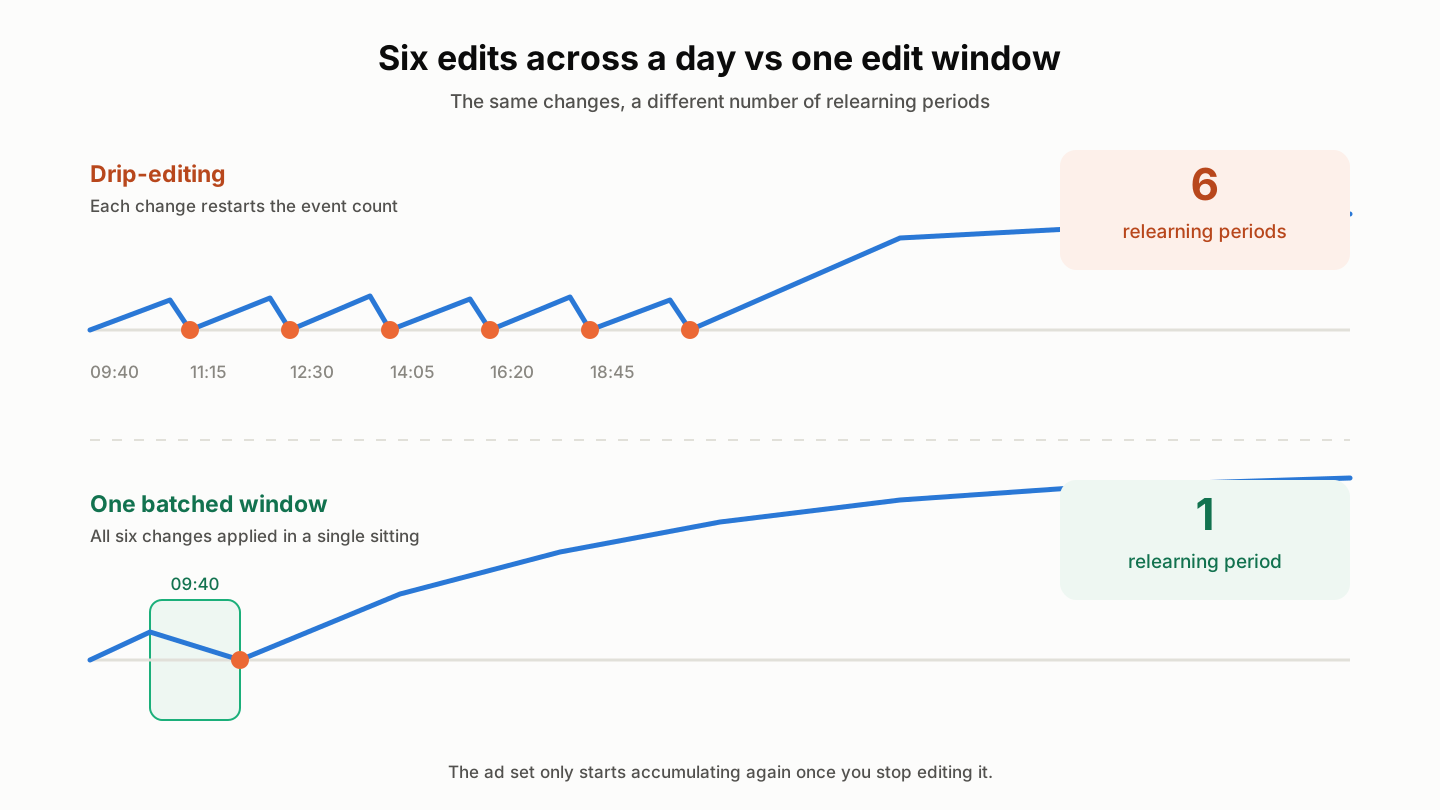
One edit window costs one restart. Six small edits cost six.
Pick the window deliberately. Edits applied at the start of a high-volume day give the ad set the fastest path back to 50 events, which is the only thing that ends the phase.
Step budgets on a schedule instead of by reflex
Reflex budget changes are the ones that hurt: a good morning, a bump at noon, another after dinner. Set a cadence, raise on it, and hold between raises so the ad set can accumulate events.
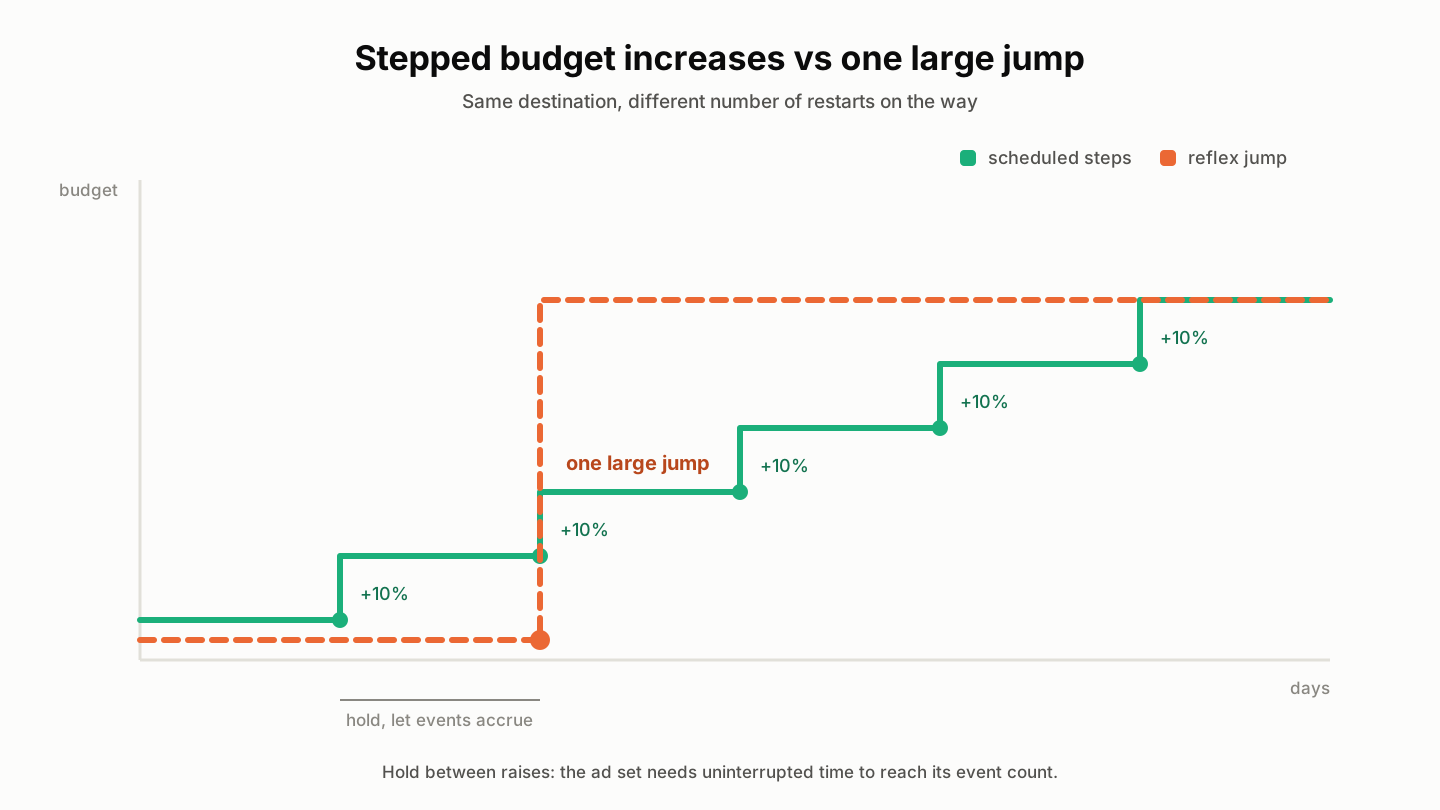
Scale in steps the algorithm can absorb, not in leaps it has to relearn.
Our own conservative autoscaler runs on exactly this logic, using small 10% bumps to grow spend "without triggering Meta's learning reset". The size of the step matters less than the fact that it is scheduled rather than reactive.
Put new creative in a new ad set, not in the winner
When an ad set carries your scale, treat it as read-only. New concepts go into a new ad set, where the learning cost is expected and budgeted rather than paid by your best performer. You will still refresh creative on a schedule because of ad fatigue, and that refresh is far cheaper in a structure that expects it.
If spinning up parallel ad sets by hand is the reason you edit the winner instead, that is a tooling problem. Launch the new ad set in bulk and the safe pattern stops being the slow one.
Let rules make the routine changes
Most reset-causing edits are routine: a budget step, a paused underperformer, a creative rotation. Routine changes belong in rules that make the change for you, firing on your thresholds instead of whenever you happen to open Ads Manager.
Building them as ad campaign automation rules gives you three things manual editing does not: the change fires at a fixed time rather than on impulse, it is logged, and it is reversible. Our library documents the learning-phase behaviour per rule, including which ones are built to avoid a reset and which deliberately accept one.
Scalemate runs Meta and TikTok on a free tier, no credit card. If you want budget stepping and creative rotation on a schedule rather than on reflex, that is the fastest way to stop paying for relearning you did not plan.
Common pitfalls
- Judging an ad set before it exits learning. Meta says to avoid it, usually giving a minimum of one week (Meta Business Help Center). Killing on day two throws away the spend that bought the learning.
- Treating learning limited as a patience problem. If bid or cost control is too low to generate enough optimization events, the ad set will not exit (Meta Business Help Center). Structure fixes it, waiting does not.
- Trusting an unsourced threshold as a rule. Build your cadence around your own event volume, not a 20% figure nobody can trace.
- Editing the winner because launching new is slow. That tooling friction gets paid for by your best ad set, once per edit.
- Fixing a reset with more edits. After a reset the counter needs events, and every further change zeroes it again. As a media buyer put it in December 2025: it does not reset again unless you make another big edit (thread, December 8, 2025).
FAQ
How long do Facebook ads stay in the learning phase?
Meta does not publish a fixed number of days. Its guidance is that performance typically improves after the phase, usually a minimum of one week (Meta Business Help Center). Duration tracks how fast the ad set accumulates optimization events, not the calendar.
How do you get Meta ads out of the learning phase?
Accumulate roughly 50 optimization events without making another significant edit (Meta Business Help Center). If volume is the blocker rather than time, you are looking at learning limited instead.
Does changing the budget reset the learning phase?
It can. Meta says budget and bid-strategy changes "may also be significant, but it depends on the magnitude of the change" (Meta Business Help Center), and names no percentage. The 20% threshold is a third-party rule of thumb. Step budgets on a cadence and the question stops mattering.
Does adding a new ad to an ad set reset the learning phase?
Yes. Meta lists adding a new ad to your ad set among its significant edits (Meta Business Help Center). Buyers disagree on how hard it bites, so on an ad set that is already performing, launch new creative in a new ad set rather than editing the winner.
Does turning ads off for a day reset the learning phase?
Turning off individual underperforming ads inside a stable ad set is reported by media buyers not to restart learning (thread, October 30, 2025). Pausing the ad set itself is a different case: Meta names it as a significant edit, without publishing a duration. The seven-day figure traces to an undated 2024 blog post rather than to Meta.
The Meta ads learning phase is not the enemy. Paying for it repeatedly is. Decide when your edits land, keep the winner off the edit list, and hand the routine changes to something that fires on a schedule.